

Supplementary Files
Keywords
computable general equilibrium model
partial equilibrium model
model integration
How to Cite
Abstract
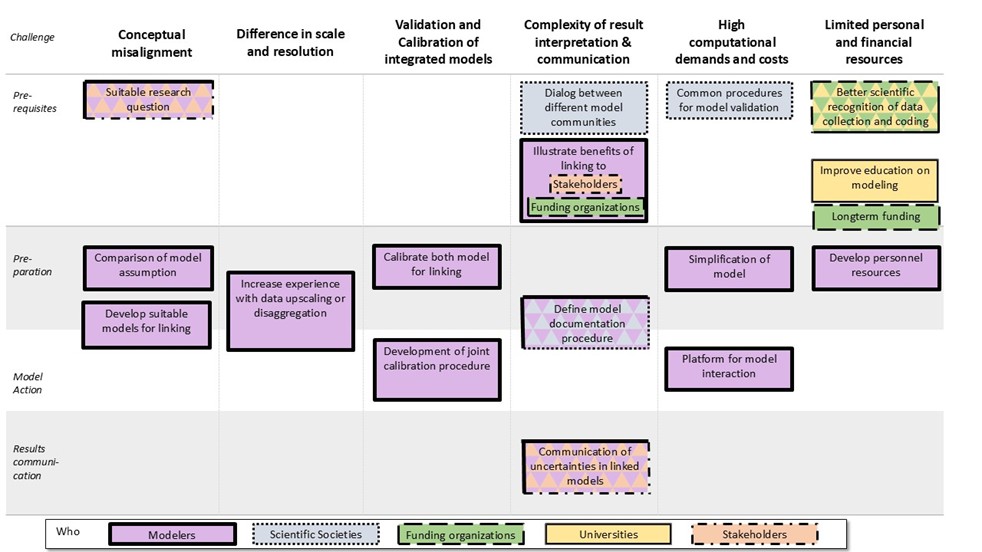
Linking computable general or partial equilibrium models with agent-based models can combine the strengths of both modeling concepts. The linking allows to trace global feedback effects while providing a flexible representation of human behavior and social interactions. This linking would facilitate the simulation of interconnected land-use and economic systems while accounting for actors’ heterogeneity, their specializations, and the representation of alternative decision models. In this paper, we examine the challenges that currently hinder the realization of these potential benefits and present a roadmap outlining possible solutions for successful model linking in the context of land use change. The main challenges include: 1) conceptual misalignment between modeling concepts, 2) differences in scales and resolution, 3) difficulties in validation and calibration of linked models, 4) increased complexity in interpreting and communicating results, 5) high demands on compu-tational infrastructure and computational costs, and 6) limited personnel and financial resources. Successfully linking different model concepts and overcoming these challenges requires the modelling communities and stakeholders to engage in long-term, platform-supported dialogue. This dialogue could facilitate the development of a shared framework for model linking, standards for model documentation, validation procedures, and appropriate approaches for communicating and evaluating results. This process will enhance the benefits and sustain the linked models while helping determine circumstances in which the advantages of linking models may outweigh the costs.
References
Akgul, Z., Villoria, N., & Hertel, T. (2016). GTAP-HET: Introducing Firm Heterogeneity into the GTAP Model. Journal of Global Economic Analysis, 1(1), 111–180. https://doi.org/10.21642/JGEA.010102AF
An, L., Grimm, V., Bai, Y., Sullivan, A., Turner II, B. L., Malleson, N., Heppenstall, A., Vincenot, C., Robinson, D., Ye, X., Liu, J., Lindkvist E., & Tang, W. (2023). Modeling agent decision and behavior in the light of data science and artificial intelligence. Environmental Modelling & Software, 166, 105713. https://doi.org/10.1016/j.envsoft.2023.105713
Anzt, H., Bach, F., Druskat, S., Löffler, F., Loewe, A., Renard, B. Y., Seemann, G., Struck, A., Achhammer, E., Aggarwal, P., Appel, F, Bader, M., Brusch, L., Busse, C., Chourdakis, G., Dabrowski, P. W., Ebert, P., Flemisch, B., Friedl, S., . . . Weeber, R. (2020). An Environment for Sustainable Research Software in Germany and Beyond: Current State, Open Challenges, and Call for Action. F1000Research, 9, 295–295. https://doi.org/10.12688/f1000research.23224.2
Appel, F., & Balmann, A. (2019). Human behaviour versus optimising agents and the resilience of farms‐Insights from agent-based participatory experiments with FarmAgriPoliS. Ecological Complexity, 40, Part B, Article 100731. https://doi.org/10.1016/j.ecocom.2018.08.005
Argueyrolles, R. (2025). Market power and fossil fuel subsidy reforms: Who should lead the call for change?. Journal of Policy Modeling, 47(1). https://doi.org/10.1016/j.jpolmod.2025.07.007
Argueyrolles, R., Heimann, T., Delzeit, D. (2025). Impact of Gasoline and Diesel Subsidy Reforms on Global Biofuel Mandates. GCB Bioenergy, 17(1). https://doi.org/10.1111/gcbb.70019
Arneth, A., Brown, C. & Rounsevell, M. D. A. (2014). Global Models of Human Decision-Making for Land-Based Mitigation and Adaptation Assessment. Nature Climate Change, 4, 550–557. https://doi.org/10.1038/NCLIMATE2250
Axtell, R. L., & Doyne Farmer, J. (2025). Agent-based modeling in economics and finance: Past, present, and future. Journal of Economic Literature, 63(1), 197-287. https://doi.org/10.1257/jel.20221319
Babatunde, K. A., Begum, R. A., & Said, F. F. (2017). Application of computable general equilibrium (CGE) to climate change mitigation policy: A systematic review. Renewable and Sustainable Energy Reviews, 78, 61–71. https://doi.org/10.1016/j.rser.2017.04.064
Bangerth, W., & Heister, T. (2014). Quo vadis, scientific software. SIAM News, 47(1), 8. https://www.math.colostate.edu/~bangerth/publications/2014-siam-news.pdf
Barreiro‐Hurle, J., Fellmann, T., & M’barek, R. (2024). Modelling in Support of Better Agricultural and Food Policies: the JRC’s Integrated Agro‐economic Modelling platform (iMAP). EuroChoices, 23(1), 43–53. https://doi.org/10.1111/1746-692X.12421
Belete, G. F., Voinov, A., Arto, I., Dhavala, K., Bulavskaya, T., Niamir, L., Moghayer, S. & Filatova, T.(2019). Exploring Low-Carbon Futures: A Web Service Approach to Linking Diverse Climate-Energy-Economy Models. Energies, 12(15), Article 2880. https://doi.org/10.3390/en12152880
Berger, T., & Troost, C. (2014). Agent-based Modelling of Climate Adaptation and Mitigation Options in Agriculture. Journal of Agricultural Economics, 65(2), 323–348. https://doi.org/10.1111/1477-9552.12045
Boulanger, P., Dudu, H., Ferrari, E., Mainar-Causapé, A. J., & Ramos, M. P. (2022). Effectiveness of Fertilizer Policy Reforms to Enhance Food Security in Kenya: A Macro‐Micro Simulation Analysis. Applied Economics, 54(8), 841–861. https://doi.org/10.1080/00036846.2020.1808180
Britz, W., & Hertel, T. W. (2011). Impacts of EU Biofuels Directives on Global Markets and EU Environmental Quality: An Integrated PE, Global CGE Analysis. Agriculture, Ecosystems & Environment, 142(1-2), 102–109. https://doi.org/10.1016/j.agee.2009.11.003
Britz, W., & van der Mensbrugghe, D. (2018). CGEBox: A flexible, modular and extendable framework for CGE analysis in GAMS. Journal of Global Economic Analysis, 3(2), 106-177. https://doi.org/10.21642/JGEA.030203AF
Brown, C, Seo, B., & Rounsevell, M (2019). Societal breakdown as an emergent property of large-scale behavioural models of land use change. Earth System Dynamics, 10(4), 809–845. https://doi.org/10.5194/esd-10-809-2019
Brown, C., Brown, K., & Rounsevell, M. (2016). A Philosophical Case for Process-Based Modelling of Land Use Change. Modeling Earth Systems and Environment, 2(50), 1–12. https://doi.org/10.1007/s40808-016-0102-1
Burfisher, M. E. (2021). Introduction to computable general equilibrium models. Cambridge University Press. https://doi.org/10.1017/CBO9780511975004
Calzadilla, A., Delzeit, R., & Klepper, G. (2014). DART-BIO: Modelling the Interplay of Food, Feed and Fuels in a Global CGE Model. Kiel Working Paper, Article 1896. https://www.ifw-kiel.de/fileadmin/Dateiverwaltung/IfW-Publications/fis-import/3df55738-5c59-4a9c-905f-2bfccb2c78b5-KWP1896.pdf
Calzadilla, A., Rehdanz, K., Betts, R., Falloon, P., Wiltshire, A., & Tol, R. (2010). Climate Change Impacts on Global Agriculture. Kiel Working Paper, Article 1617. https://www.ifw-kiel.de/fileadmin/Dateiverwaltung/IfW-Publications/fis-import/a90d19fb-bb4f-4ae4-8a8e-46819aa1d7c5-CalzadillaKIEL1617.pdf
Campagnolo, L., & De Cian, E. (2022). Distributional Consequences of Climate Change Impacts on Residential Energy Demand across Italian Households. Energy Economics, 110, Article 106020. https://doi.org/10.1016/j.eneco.2022.106020
Coronese, M., Occelli, M., Lamperti, F., & Roventini, A. (2023). AgriLOVE: Agriculture, land-use and technical change in an evolutionary, agent-based model. Ecological Economics, 208, Article 107756. https://doi.org/10.1016/j.ecolecon.2023.107756
Corong, E. L., Hertel, T. W., McDougall, R., Tsigas, M. E., & Van Der Mensbrugghe, D. (2017). The standard GTAP model, version 7. Journal of Global Economic Analysis, 2(1), 1-119. https://doi.org/10.21642/JGEA.020101AF
Delzeit, R., Beach, R., Bibas, R., Britz, W., Chateau, J., Freund, F., Lefevre, J., Schuenemann, F., Sulser, T., Valin, H., Ruijven, B. van, Weitzel, M., Willenbockel, D., & Wojtowicz, K. (2020). Linking Global CGE Models with Sectoral Models to Generate Baseline Scenarios: Approaches, Challenges, and Opportunities. Journal of Global Economic Analysis, 5(1), 162–195. https://doi.org/10.21642/JGEA.050105AF
Dou, Y., Yao, G., Herzberger, A., Da Silva, R., Song, Q., Hovis, C., Batistella, M., Moran, E., Wu, W., & Liu, J. (2020). Land-Use Changes in Distant Places: Implementation of a Telecoupled Agent-Based Model. Journal of Artificial Societies and Social Simulation, 23(1), Article 11. https://doi.org/10.18564/jasss.4211
Dressler, G., Groeneveld, J., Hetzer, J., Janischewski, A., Nolzen, H, Rödig, E., Schwarz, N., Taubert, F., Thober, J., Will, M., Williams, T., Wirth, S. B., & Müller, B. (2022). Upscaling in Socio-Environmental Systems Modelling: Current Challenges, Promising Strategies and Insights from Ecology. Socio-Environmental Systems Modelling, 4, Article 18112. https://doi.org/10.18174/sesmo.18112
European Commission. (2018). Analytical tools and models to support policies related to agriculture and food. https://cordis.europa.eu/programme/id/H2020_RUR-04-2018-2019/de
Farmer, J. D., & Foley, D. (2009). The Economy Needs Agent-Based Modelling. Nature, 460, 685–686. https://doi.org/10.1038/460685a
Finger, R. (2024). Europe’s ambitious pesticide policy and its impact on agriculture and food systems. Agricultural Economics, 55(2), 265–269. https://doi.org/10.1111/agec.12817
Finger, R., Henningsen, A., Höhler, J., Huber, R., Rommel, J., & Grebitus, C. (2024). Open science in agricultural economics. Q Open, 5(3), Article qoae029. https://doi.org/10.1093/qopen/qoae029
Filatova, T. , J. Akkerman, F. Bosello, T. Chatzivasileiadis, I. Cortés Arbués, A. Ghorbani, O. Ivanova, N. Knittel, J. Kwakkel, F. Lamperti, N.R. Magliocca, G. Marangoni, S. Nabernegg, A. Pichler,A. Poujon, K. Safarzynska, A. Taberna, M.A.E. van Sluisveld, L. Verbeek, & T. Wei. (2024). The power of bridging decision scales: Model coupling for advanced climate policy analysis, Proc. Natl. Acad. Sci. U.S.A. 122 (38) e2411592122, https://doi.org/10.1073/pnas.2411592122
Fournier Gabela, J. G., Spiegel, A., Stepanyan, D., Freund, F., Banse, M., Gocht, A., Söder, M., Heidecke, C., Osterburg, B., & Matthews, A. (2024). Carbon leakage in agriculture: when can a carbon border adjustment mechanism help? Climate Policy, 24(10), 1410–1425. https://doi.org/10.1080/14693062.2024.2387237
Ge, J., Polhill, J. G., Macdiarmid, J. I., Fitton, N., Smith, P., Clark, H., Dawson, T., & Aphale, M. (2021). Food and nutrition security under global trade: a relation-driven agent-based global trade model. Royal Society Open Science, 8(1), Article 201587. https://doi.org/10.1098/rsos.201587
Ghaith, Z., Kulshreshtha, S., Natcher, D., & Cameron, B. (2021). Regional Computable General Equilibrium Models: A Review. Journal of Policy Modeling, 43(3), 710–724. https://doi.org/10.1016/j.jpolmod.2021.03.005
Giesecke, J. A., & Madden, J. R. (2013). Chapter 7 - Regional Computable General Equilibrium Modeling.Handbook of Computable General Equilibrium Modeling, 1, 379–475. https://doi.org/10.1016/B978-0-444-59568-3.00007-9
Gocht, A., Britz, W., Ciaian, P., & Paloma, S. G. y. (2013). Farm type effects of an EU-wide direct payment harmonisation. Journal of Agricultural Economics, 64(1), 1–32. https://doi.org/10.1111/1477-9552.12005
Gocht, A., Ciaian, P., Bielza, M., Terres, J.‑M., Röder, N., Himics, M., & Salputra, G. (2017). EU-wide economic and environmental impacts of CAP greening with high spatial and farm-type detail. Journal of Agricultural Economics, 68(3), 651–681. https://doi.org/10.1111/1477-9552.12217
Gocht, A., & Witzke, H. P. (2023), P. CAPRI Modelling system. https://capri-model.org/
Grêt-Regamey, A., Huber, S. H., & Huber, R. (2019). Actors’ diversity and the resilience of social-ecological systems to global change. Nature Sustainability, 2, 290–297. https://doi.org/10.1038/s41893-019-0236-z
Groeneveld, J., Müller, B., Buchmann, C. M., Dressler, G., Guo, C., Hase, N., ... & Schwarz, N. (2017). Theoretical foundations of human decision-making in agent-based land use models–A review. Environmental modelling & software, 87, 39-48. https://doi.org/10.1016/j.envsoft.2016.10.008
Grimm, V., Johnston, A., Thulke, H. H., Forbes, V. E., & Thorbek, P. (2020). Three Questions to Ask Before Using Model Outputs for Decision Support. Nature Communications, 11, Article 4959. https://doi.org/10.1038/s41467-020-17785-2
Grimm, V., Augusiak, J., Focks, A., Frank, B. M., Gabsi, F., Johnston, A. S. A., Liu, C., Martin, B. T., Meli, M., Radchuk, V., Thorbek, P., & Railsback, S. F. (2014). Towards better modelling and decision support: Documenting model development, testing, and analysis using TRACE. Ecological modelling, 280, 129-139. https://doi.org/10.1016/j.ecolmodel.2014.01.018
Grujić, N., Brdar, S., Osinga, S., Hofstede, G. J., Athanasiadis, I. N., Pljakić, M., Obrenović, N., Govedarica, M., & Crnojević, V. (2022). Combining Telecom Data with Heterogeneous Data Sources for Traffic and Emission Assessments—An Agent-Based Approach. ISPRS Int. J. Geo-Inf., 11(7), Article 366. https://doi.org/10.3390/ijgi11070366
Happe, K., Kellermann, K., & Balmann, A. (2006). Agent-based Analysis of Agricultural Policies: An Illustration of the Agricultural Policy Simulator AgriPoliS, Its Adaptation and Behavior. Ecology and Society, 11(1), Article 49. https://doi.org/10.5751/ES-01741-110149
Hasselbring, W., Carr, L., Hettrick, S., Packer, H., & Tiropanis, T. (2019). FAIR and Open Computer Science Research Software. ArXiv, Article 908.05986. https://doi.org/10.48550/arXiv.1908.05986
Heckbert, S., Baynes, T., & Reeson, A. (2010). Agent-based modeling in ecological economics. Annals of the New York Academy of Sciences, 1185(1), 39–53. https://doi.org/10.1111/j.1749-6632.2009.05286.x
Helbing, D. (2012). Agent-based modeling. In Social self-organization: Agent-based simulations and experiments to study emergent social behavior (pp. 25-70). Berlin, Heidelberg: Springer Berlin Heidelberg.
Heimann, T., Argueyrolles, R., Reinhardt, M., Delzeit, R. (2023). Phasing out palm and soy oil biodiesel in the EU: What is the benefit?. GCB Bioenergy, 16(1). https://doi.org/10.1111/gcbb.13115
Horridge, M., & Pearson, K. (2011). Solution software for CGE modeling. Centre of Policy Studies, Article G-214. https://vuir.vu.edu.au/38903/1/g-214.pdf
Huber, R. , Bakker, M., Balmann, A., Berger, T., Bithell, M., Brown, C., Grêt-Regamey, A., Xiong, H., Le, Q. B., Mack, G., Meyfroidt, P., Millington, J., Müller, B., Polhill, J. G., Sun, Z., Seidl, R., Troost, C., & Finger, R. (2018). Representation of Decision-Making in European Agricultural Agent-Based Models. Agricultural Systems, 167, 143–160. https://doi.org/10.1016/j.agsy.2018.09.007
Huber, R., Xiong, H., Keller, K., & Finger, R. (2022). Bridging behavioural factors and standard bio-economic modelling in an agent-based modelling framework. Journal of Agricultural Economics, 73(1), 35–63. https://doi.org/10.1111/1477-9552.12447
Husby, T. G., & Koks, E. E. (2017). Household Migration in Disaster Impact Analysis: Incorporating Behavioural Responses to Risk. Natural Hazards, 87(1), 287–305. https://doi.org/10.1007/s11069-017-2763-0
Jafari, T., & Britz, W. (2018). Modelling Heterogeneous Firms and Non-Tariff Measures in Free Trade Agreements using Computable General Equilibrium. Economic Modelling, 73, 279–294. https://doi.org/10.1016/j.econmod.2018.04.004
Jafari, Y., & Othman, J. (2016). Impact of biofuel development on Malaysian agriculture: A comparative statics, multicommodity, multistage production, partial equilibrium approach. Food and Energy Security, 5(3), 192–202. https://doi.org/10.1002/fes3.84
Jansson, T., Malmström, N., Johansson, H., & Choi, H. (2023). Carbon taxes and agriculture: the benefit of a multilateral agreement. Climate Policy, 24(1), 13–25. https://doi.org/10.1080/14693062.2023.2171355
Kelly, R. A., Jakeman, A. J., Barreteau, O., Borsuk, M. E., ElSawah, S., Hamilton, S. H., Henriksen, H. J., Kuikka, S., Maier, H. R., Rizzoli, A. E., van Delden, H., & Voinov, A. A. (2013). Selecting Among Five Common Modelling Approaches for Integrated Environmental Assessment and Management. Environmental Modelling & Software, 47, 159–181. https://doi.org/10.1016/j.envsoft.2013.05.005
Klein, F., van Bergh, J. den, Foramitti, J., & Konc, T. (2025). Agentizing a General Equilibrium Model of Environmental Tax Reform. Environmental and Resource Economics, 88(2), 459–502. https://doi.org/10.1007/s10640-024-00937-z
Kravari, K., & Bassiliades, N. (2015). A survey of agent platforms. Journal of Artificial Societies and Social Simulation, 18(1), Article 11. https://doi.org/10.18564/jasss.2661
Kreft, C., Finger, R., & Huber, R. (2023). Action-versus results-based policy designs for agricultural climate change mitigation. Applied Economic Perspectives and Policy. 46(3), 1010-1037. https://doi.org/10.1002/aepp.13376
Kremmydas, D., Athanasiadis, I. N., & Rozakis, S. (2018). A review of agent based modeling for agricultural policy evaluation. Agricultural systems, 164, 95-106. https://doi.org/10.1016/j.agsy.2018.03.010
Krook-Riekkola, A., Berg, C., Ahlgren, E. O., & Söderholm, P. (2017). Challenges in top-down and bottom-up soft-linking: Lessons from linking a Swedish energy system model with a CGE model. Energy, 141, 803–817. https://doi.org/10.1016/j.energy.2017.09.107
Lee, H., Lee, J., & Koo, Y. (2022). Economic Impacts of Carbon Capture and Storage on the Steel Industry – A Hybrid Energy System Model Incorporating Technological Change. Applied Energy, 317, Article 119208. https://doi.org/10.1016/j.apenergy.2022.119208
Lee, J. S., Filatova, T., Ligmann-Zielinska, A., Hassani-Mahmooei, B., Stonedahl, F., Lorscheid, I., Voinov, A., Pollhill, G., Sun, Z., Parker, C. P. (2015). The Complexities of Agent-Based Modeling Output Analysis. Journal of Artificial Societies and Social Simulation, 18(4). https://doi.org/10.18564/JASSS.2897
Li, F., Li, Z., Chen, H., Chen, Z., & Li, M. (2020). An agent-based learning-embedded model (ABM-learning) for urban land use planning: A case study of residential land growth simulation in Shenzhen, China. Land Use Policy, 95(C), 104620. https://ideas.repec.org//a/eee/lauspo/v95y2020ics0264837719303254.html
Lippe, M., Bithell, M., Gotts, N., Natalini, D., Barbrook-Johnson, P., Giupponi, C., Hallier, M., Hofstede, G. J., Le Page, C., Matthews, R. B., Schlüter, M., Smith, P., Teglio, A., & Thellmann, K. (2019). Using agent-based modelling to simulate social-ecological systems across scales. GeoInformatica, 23(2), 269–298. https://doi.org/10.1007/s10707-018-00337-8
Liu, D., Zheng, X., & Wang, H. (2020). Land-use Simulation and Decision-Support System (LandSDS): Seamlessly Integrating System Dynamics, Agent-Based Model, and Cellular Automata. Ecological Modelling, 417, Article 108924. https://doi.org/10.1016/j.ecolmodel.2019.108924
Magliocca, N., Safirova, E., McConnell, V., & Walls, M. (2011). An economic agent-based model of coupled housing and land markets (CHALMS). Computers, Environment and Urban Systems, 35(3), 183-191. https://doi.org/10.1016/j.compenvurbsys.2011.01.002
Meuwissen, M. P. M., Feindt, P. H., Spiegel, A., Termeer, C. J. A. M., Mathijs, E., Mey, Y. de, Finger, R., Balmann, A., Wauters, E., Urquhart, J., Vigani, M., Zawalińska, K., Herrera, H., Nicholas-Davies, P., Hansson, H., Paas, W., Slijper, T., Coopmans, I., Vroege, W., … Reidsma, P. (2019). A framework to assess the resilience of farming systems. Agricultural Systems, 176, Article 102656. https://doi.org/10.1016/j.agsy.2019.102656
Michetti, M. (2012). Modelling land use, land-use change, and forestry in climate change: A review of major approaches. FEEM Working Paper, Article 46.2012. http://dx.doi.org/10.2139/ssrn.2122298
Millington, J. D., Katerinchuk, V., da Silva, R. F. B., de Castro Victoria, D., & Batistella, M. (2021). Modelling drivers of Brazilian agricultural change in a telecoupled world. Environmental Modelling & Software, 139, Article 105024. https://doi.org/10.1016/j.envsoft.2021.105024
Millington, J., Xiong, H., Peterson, S., & Woods, J. (2017). Integrating modelling approaches for understanding telecoupling: Global food trade and local land use. Land, 6(3), 56. https://doi.org/10.3390/land6030056
Moallemi, E. A., Castonguay, A. C., Mason-D’Croz, D., Nelson, R., Britz, W., Allen, C., Hadjikakou, M., Battaglia, M., Bryan, A.B., Conti, C., Marcos-Martinez, R., Frank, S. Nong, D., Eker, S., Razavi, S., Navarro-Garcia, J. & Gao, L. (2025). Complexity and uncertainty in future food system transformation modelling. Nature Food, 1-12. https://doi.org/10.1038/s43016-025-01257-1
Möhring, A., Mack, G., Zimmermann, A., Ferjani, A., Schmidt, A., & Mann, S. (2016). Agent-Based Modeling on a National Scale‐Experience from SWISSland. Agroscope Science, 30, 1–56. www.swissland.org
Moore, F., Baldos, U. L. C., & Hertel, T. (2017). Economic Impacts of Climate Change on Agriculture: A Comparison of Process-based and Statistical Yield Models. Environmental Research Letters, 12(6), Article 65008. https://doi.org/10.1088/1748-9326/aa6eb2
Morgan, F. J., & Daigneault, A. J. (2015). Estimating impacts of climate change policy on land use: An agent-based modelling approach. PLoS One, 10(5), Article e0127317. https://doi.org/10.1371/journal.pone.0127317
Müller, B., Balbi, S., Buchmann, C. M., Sousa, L. de, Dressler, G., Groeneveld, J., Klassert, C. J., Le, Q. B , Millington, J., Nolzen, H., Parker, D. C., Polhill, J. G., Schlüter, M., Schulze, J., Schwarz, N., Sun, Z., Taillandier, P., & Weise, H. (2014). Standardised and Transparent Model Descriptions for Agent-Based Models: Current Status and Prospects. Environmental Modelling & Software, 55, 156–163. https://doi.org/10.1016/j.envsoft.2014.01.029
Müller, B., Hoffmann, F., Heckelei, T., Müller, C., Hertel, T. W., Polhill, J. G., Wijk, M. van, Achterbosch, T., Alexander, P., Brown, C., Kreuer, D., Ewert, F., Ge, J., Millington, J. D. A., Seppelt, R., Verburg, P. H., & Webber, H. (2020). Modelling Food Security: Bridging the Gap between the Micro and the Macro Scale. Global Environmental Change, 63, Article 102085. https://doi.org/10.1016/j.gloenvcha.2020.102085
Niamir, L., Ivanova, O., & Filatova, T. (2020). Economy-wide Impacts of Behavioral Climate Change Mitigation: Linking Agent-based and Computable General Equilibrium Models. Environmental Modelling & Software, 134, Article 104839. https://doi.org/10.1016/j.envsoft.2020.104839
Nilsson, L., Clough, Y., Smith, H. G., Olsson, J. A., Brady, M. V., Hristov, J., Olsson, P., Skantze, K., Ståhlberg, D., & Dänhardt, J. (2019). A suboptimal array of options erodes the value of CAP ecological focus areas. Land Use Policy, 85, 407–418. https://doi.org/10.1016/j.landusepol.2019.04.005
Nolan, J., Parker, D., Van Kooten, G. C., & Berger, T. (2009). An overview of computational modeling in agricultural and resource economics. Canadian Journal of Agricultural Economics/Revue canadienne d'agroeconomie, 57(4), 417-429. HYPERLINK "https://doi.org/10.1111/j.1744-7976.2009.01163.x"https://doi.org/10.1111/j.1744-7976.2009.01163.x
Nowak, S. A., Matthews, L. J., & Parker, A. M. (2017). A general agent-based model of social learning. RAND Corporation. https://www.rand.org/pubs/research_reports/RR1768.html
Oita, A., Malik, A., Kanemoto, K., Geschke, A., Nishijima, S., & Lenzen, M. (2016). Substantial nitrogen pollution embedded in international trade. Nature Geoscience, 9(2), 111–115. https://doi.org/10.1038/NGEO2635
Pahmeyer, C., Schäfer, D., Kuhn, T., & Britz, W. (2021). Data on a Synthetic Farm Population of the German Federal State of North Rhine-Westphalia. Data in Brief, 36, Article 107007. https://doi.org/10.1016/j.dib.2021.107007
Philippidis, G., Sartori, M., Ferrari, E., & M’Barek, R. (2019). Waste not, want not: A bio-economic impact assessment of household food waste reductions in the EU. Resources, Conservation & Recycling, 146, 514–522. https://doi.org/10.1016/j.resconrec.2019.04.016
Pitson, C., Bijttebier, J., Appel, F., & Balmann, A. (2020). How Much Farm Succession is Needed to Ensure Resilience of Farming Systems? EuroChoices, 19(2), 37–44. https://doi.org/10.1111/1746-692X.12283
Robinson, D. T., Di Vittorio, A., Alexander, P., Arneth, A., Barton, C. M., Brown, D. G., Kettner, A., Lemmen, C., O’Neill, B. C., Janssen, M., Pugh, T. A. M., Rabin, S. S., Rounsevell, M., Syvitski, J. P., Ullah, I., & Verburg, P. H. (2018). Modelling Feedbacks between Human and Natural Processes in the Land System. Earth System Dynamics, 9(2), 895–914. https://doi.org/10.5194/esd-9-895-2018
Rounsevell, M. D. A., Robinson, D. T., & Murray-Rust, D. (2012). From Actors to Agents in Socio-ecological Systems Models. Philosophical Transactions of the Royal Society B: Biological Sciences, 367(1586), 259–269. https://doi.org/10.1098/rstb.2011.0187
Schmidt, A., Necpalova, M., Mack, G., Möhring, A., & Six, J. (2021). A Food Tax Only Minimally Reduces the N Surplus of Swiss Agriculture. Agricultural Systems, 194, Article 103271. https://doi.org/10.1016/j.agsy.2021.103271
Stepanyan, D., Heidecke, C., Osterburg, B., & Gocht, A. (2023). Impacts of national vs European carbon pricing on agriculture. Environmental Research Letters, 18(7), Article 74016. https://doi.org/10.1088/1748-9326/acdcac
Taheripour, F., Zhao, X., Horridge, M., Farrokhi, F., & Tyner, W. (2020). Land Use in Computable General Equilibrium Models. Journal of Global Economic Analysis, 5(2), 63–109. https://doi.org/10.21642/JGEA.050202AF
Tang, W., Bennett, D. A., & Wang, S. (2011). A parallel agent-based model of land use opinions. Journal of Land Use Science, 6(2-3), 121–135. https://doi.org/10.1080/1747423X.2011.558597
Troost, C., Huber, R., Bell, A. R., van Delden, H., Filatova, T., Le, Q. B., Lippe, M., Niamir, L., Polhill, J. G., Sun, Z., & Berger, T. (2023). How to Keep it Adequate: A Protocol for Ensuring Validity in Agent-Based Simulation. Environmental Modelling & Software, 159, Article 105559. https://doi.org/10.1016/j.envsoft.2022.105559
Uthes, S., & Kiesel, J. (2020). Creating a synthetic landscape: Spatial allocation of non-spatial single farm data. Agricultural Systems, 177, Article 102740. https://doi.org/10.1016/j.agsy.2019.102740
Uusitalo, L., Lehikoinen, A., Helle, I., & Myrberg, K. (2015). An overview of methods to evaluate uncertainty of deterministic models in decision support. Environmental Modelling & Software, 63, 24–31. https://doi.org/10.1016/j.envsoft.2014.09.017
van Duinen, R., Filatova, T., Jager, W., & van der Veen, A. (2016). Going Beyond Perfect Rationality: Drought Risk, Economic Choices and the Influence of Social Networks. Annals of Regional Science, 57, 335–369. https://doi.org/10.1007/s00168-015-0699-4
Voinov, A., & Shugart, H. H. (2013). ’Integronsters’, Integral and Integrated Modeling. Environmental Modelling & Software, 39, 149–158. https://doi.org/10.1016/j.envsoft.2012.05.014
Voinov, A., & Bousquet, F. (2010). Modelling with stakeholders. Environmental Modelling & Software, 25(11), 1268–1281. https://doi.org/10.1016/j.envsoft.2010.03.007
Warmink, J. J., Janssen, J., Booij, M. J., & Krol, M. S. (2010). Identification and classification of uncertainties in the application of environmental models. Environmental Modelling & Software, 25(12), 1518–1527. https://doi.org/10.1016/j.envsoft.2010.04.011
Wimmer, S., & Finger, R. (2023). A note on synthetic data for replication purposes in agricultural economics. Journal of Agricultural Economics, 74(1), 316–323. https://doi.org/10.1111/1477-9552.12505
Zabel, F., Delzeit, R., Schneider, J., Seppelt, R., Mauser, W., & Václavík, T. (2019). Global impacts of future cropland expansion and intensification on agricultural markets and biodiversity. Nature Communications, 10, Article 2844. https://doi.org/10.1038/s41467-019-10775-z
Zadeh, F. K., Nossent, J., Sarrazin, F., Pianosi, F., van Griensven, A., Wagener, T., & Bauwens, W. (2017). Comparison of variance-based and moment-independent global sensitivity analysis approaches by application to the SWAT model. Environmental Modelling & Software, 91, 210–222. https://doi.org/10.1016/j.envsoft.2017.02.001
Zhang, J., & Robinson, D. T. (2021). Replication of an Agent-Based Model Using the Replication Standard. Environmental Modelling & Software, 139, Articel 105016. https://doi.org/10.1016/j.envsoft.2021.105016
Zhang, Q., Zhang, X., Cui, Q., Cao, W., He, L., Zhou, Y., Li, X., & Fan, Y. (2022). The Unequal Effect of the COVID-19 Pandemic on the Labour Market and Income Inequality in China: A Multisectoral CGE Model Analysis Coupled with a Micro-Simulation Approach. International Journal of Environmental Research and Public Health, 19(3), Article 1320. https://doi.org/10.3390/ijerph19031320

This work is licensed under a Creative Commons Attribution-NonCommercial 4.0 International License.
Copyright (c) 2026 Alena Schmidt, Franziska Appel, Filippo Arfini, Robin Argueyrolles, Lisa Baldi, Tatiana Filatova, Robert Finger, Jiaqi Ge, Nastasija Grujić, Thomas Heckelei, Robert Huber, Ahmet Ali Koç, Chunhui Li, Gabriele Mack, Birgit Müller, Davit Stepayan, Meike Will, Ruth Delzeit